 |
| Four years after I published my POW-MIA book, an Army War College newsletter gave me a nice mention. A salute to the AWC, where I joined the Class of 2015 as a member of their National Security Seminar. (See earlier posting) |
Saturday, June 18, 2016
Prominent Mention For POW-MIA Book


Friday, June 3, 2016
Agent Orange Hearing in the Heartland
 |
| Emotional testimony was given to Agent Orange panel in Iowa. |
The group Vietnam Veterans of American held its first fact-finding hearing in Des Moines, Iowa, in May, 2016. The mission was two fold: to hear from Iowa vets and their family members about serious health problems that may related to exposure to defoliants used in the Vietnam War; and to urge support for government funding of research to study suspected links, including suspicions that offspring are also threatened. From Iowa Public Radio.
http://iowapublicradio.org/post/new-generations-fear-agent-orange
Thursday, March 31, 2016
Inside Story: The Floating Restaurant Bombing
 |
| Here is the original manuscript of my story, published in the June 2016 issue of Vietnam Magazine; unedited and without the professional layout and photos contained in the finished product. |
Viet Cong terrorism was well established across South Vietnam ,
especially rampant in the countryside, and it was moving into the capital city
as the allied presence intensified. On the previous Christmas Eve, the Brink
Hotel (often referred to as the Brinks), a residence for American military
officers, was bombed by the Viet Cong. Three months later, the U.S. Embassy was
hit, and the Saigon air terminal was targeted
just nine days prior to the bloodbath at the My Canh, which would become the
most sensational terrorist incident of the war.
Urban commandos had been staking out the target, including
Huynh Phi Long, the Viet Cong sapper whose inside story was told in People’s Army, a publication of Vietnam ’s
Defense Ministry. Phi Long, the article speculates, appeared to be about 60
years old at the time of the interview in 2010, and “had carefully studied the
terrain and the enemy’s movement habits, his drinking habits and his playboy
habits.”
Security surrounding the My Canh was extraordinary on June
25, 1965. According to the expose, three armed policemen stood guard at the
gangplank which diners would use to cross from the riverbank to the on-deck,
open-air dining room. Other uniformed and plain-clothes officers were watching
from an open area opposite the barge. Armored vehicles and combat soldiers were
manning nearby intersections and naval vessels patrolled the river. Phi Long
was assisted by Le Van Ray, another member of Saigon ’s
67th Commando Unit.
The two VC sappers approached the floating restaurant on
bicycles, one was motorized. “Phi Long led the way, and carrying one time bomb,
while comrade Ray pedaled a bicycle, pretending to be a newspaper seller, as he
transported a 22 pound, directional, claymore-type mine.” They weaved through
traffic, even passing through a checkpoint, using a crowd of Vietnamese as
cover. As they approached the My Canh, several peddlers were walking in front
of the restaurant and there was a cigarette stand near to the entrance.
Set to detonate in a few minutes, Long parked his bicycle
bomb so the blast would spray shrapnel over two-thirds of the barge, then took
out some money to buy cigarettes and walked a short distance to a get-away
motorcycle that another conspirator had pre-positioned. In the meantime, Ray
had set a second directional mine and joined Long to make their departure.
They had gone 50 meters when the first explosion blew. Metal shards peppered the
hull and tore through the dining room; customers panicked and ran for the walkway desperate to escape.
As the bombers’ motor scooter reached the Nguyen Hue traffic
circle, Phi Long was stopped by police, but the two were allowed to proceed
after they produced IDs. At that very moment, the second mine exploded, ripping
through the flesh and bone of fleeing customers, peddlers on the shore, mothers
and children, mostly civilians. “Enemy sirens echoed loudly and the streets
turned into a scene of chaos,” according to the military publication. The
translation goes on, “Only the two commandos were filled with a feeling of
incredible joy.” Minutes after the twin blasts, the People’s Army writes, the U.S. Ambassador arrived on the scene: “The ambassador shook his head hopelessly and sadly got back into his car seeming to be unable to believe what had just happened.”
 |
| Removing the dead from the My Canh. Photo from the U.S. Public Affairs Office. Like so many other Americans, I had dined at the floating restaurant many times. |
The horrific crime would go down as a successful example of maximum
impact. It was a trendy location during prime time, Friday evening just after 8
o’clock, an international venue, and only a few blocks away from foreign news
bureaus, guaranteeing extensive media coverage. This excerpt is from a combined
Associated Press and United Press International wire story that ran on the
front page of an American newspaper:
“The restaurant was a
ruin, both decks a smoking, smoldering mass of broken bulwarks and smashed
tables. An American woman, mutilated in her torn clothing, responded weakly to
mouth-to-mouth resuscitation administered by a U.S.
The unforgettable carnage resurfaces as intense flash backs
50 years later, even for grizzled war reporters. “The street was full of
sandals that people had run out of, or been blown out of,” according to Joe
Galloway, former UPI journalist. “One vivid memory is the top of a Vietnamese
woman’s head laying on the white tablecloth…with long, flowing, black hair
cascading down the side. I never ate there again.”
A history of sapper forces in Vietnam , written by the former
enemy, claims the attack ended up “killing 51 CIA intelligence officers and
wounding many other personnel.” Western reports put the final death toll as
high as 48. The Joint U.S. Public Affairs Office (JUSPAO) listed 12 Americans
among the dead and 123 total casualties, killed and injured. Most of the
victims were Vietnamese. In addition to U.S. citizens, other nationalities
included French, German, Swiss and Filipino. The shock waves went worldwide.
As for the CIA assertion, Vietnam War historian Erik Villard
says, “You can’t just take them at face value. Some of those people may have
been informants, others not actually on the CIA payroll, or, the VC suspected
they might be, so it’s not like you’ve got 51 James Bonds.” Nonetheless, the People’s Army profile on bomber Phi Long alleges that the My Canh
owner, identified as Phu Lam, “was a trusted intelligence lackey of the
CIA…superiors believed that by destroying the restaurant we would essentially
have destroyed an American-puppet source…” Regardless of any proven connection,
one can assume that CIA personnel would have frequented the My Canh, which was a
short walk from the U.S. Embassy.
Perhaps a bigger factor in the communists’ motive was straightforward
pay back. The People’s Army rendering
of bomber Phi Long was blunt in calling the My Canh incident, “an act of
revenge for the death of Comrade Tran Van Dang, a commando fighter who had just
been executed by the U.S.
and the puppets at Ben Thanh Market on June 20, 1965.” The 25 year old
terrorist was blindfolded, tied to a post, and publicly killed by a South
Vietnamese firing squad in central Saigon for
trying to bomb an American billet.
The enemy reprisal went one step further. In a clear tit for
tat, Radio Hanoi announced the execution of Army Sergeant Harold Bennett, from Arkansas , and suggested other Americans might face the same fate. “The punishment serves to warn the U.S. aggressors
and their henchmen…that the murderers must pay for their blood debts. The
crimes of the bloodthirsty devils are intolerable.” While numerous Viet Cong
had already been executed by the Saigon
government, Sgt. Bennett was the first American POW put to death during the war.
He was an adviser with South Vietnamese Rangers and was captured on Dec. 29,
1964 at Binh Gia, when the unit was overrun.
Within hours of the My Canh mayhem, the communist Vietnamese
and American governments were exchanging terse rejoinders and propaganda. Radio
Hanoi and Viet Cong radio both claimed that hundreds of U.S. aggressors were
killed or wounded, the restaurant was seriously damaged and that a U.S. warship
nearby was blown up. The following day, the Joint U.S. Public Affairs Office
tried to set the record straight in an eight-page pamphlet. Ambassador Maxwell
Taylor said, “This surely was the act of desperate men who have begun to
realize that they cannot win. Last night’s outrage, like the wanton murder of
an American prisoner…can only strengthen us in our resolve.” As for the
inflated casualty toll of Americans, the embassy said most of the victims were
Vietnamese, there was no harm to any ships in the harbor, and damage to the
restaurant was minor; “the bombs were designed to kill people.” The My Canh
reopened in five days.
Behind the public pronouncements, Ambassador Taylor was recommending
severe punishment for the Saigon slaughter. In
a cable from the U.S. Mission in Saigon, held at the Lyndon B. Johnson Library,
Taylor laid out his suspicions: “Viet Cong execution of Sgt. Bennett, closely
followed by My Canh Restaurant atrocity, brings into sharp focus blackmail
potential VC and Hanoi possess in numbers of U.S. hostages in their hands and
the usefulness of this blackmail to support a stepped-up terrorist campaign.”
Ambassador Taylor, a four star general and former Chairman
of the Joint Chiefs of Staff, urged an immediate bombing attack in the
Hanoi-Haiphong area, accompanied by major leaflet drops and maximum
exploitation by Voice of America and other media. He also recommended a
presidential statement announcing the reprisal to show the U.S. “would not
stand for blatant violation of all standards of humanity and international conduct.”
The ambassador’s advice was overruled by Secretary of State Dean Rusk and
Secretary of Defense Robert McNamara. National Security Adviser McGeorge Bundy
sent this response to the president at the LBJ Ranch: “Rusk, McNamara and I all
disagree with this recommendation.” They favored a more restrained response,
but to still “hold Hanoi
responsible.”
The North Vietnamese continued to extract propaganda from
the My Canh bombing, including this classic broadcast from Radio Hanoi: “You
are a long way from Fort Riley now and there is no Jersey coffee in town on
Washington Street where you can sit around the counter eating hamburgers and
sipping coffee without having to be afraid a bomb might go off, like it did at
that restaurant in Saigon a few weeks back. You can get killed here. Get out
while you’re still alive and before it’s too late.”
Far more than 100 people were on board the vessel and along
the boulevard when the commandos struck. Twenty-eight Americans were killed,
missing, or injured. According to newspaper accounts of the incident, U.S.
losses included government workers and military personnel: civilian Air Force
employees who repaired damaged aircraft, military advisers in from the field,
and three soldiers attached to the Phu Lam Signal Battalion, who were among the
dead.
 |
| The cover shot on the U.S. military's pamphlet deploring the incident, |
There is background on the Vietnamese casualties in the
brochure issued by U.S.
public affairs officers, illustrated with ghastly pictures. The front cover
shows an American holding the bloody body of a young girl, visibly in shock. One
of the photo captions reads: “Of the 123 people killed and injured, 89 were
Vietnamese: cyclo drivers and government officials, sugarcane vendors and
businessmen, young women clerks and a popular singer, and of course many
children.” Ambassador Taylor is seen visiting patients in a hospital where
survivors were interviewed. A 13 year old boy, who was selling peanuts was
recovering from surgery to remove shrapnel from his back and a leg; a 22 year
old dressmaker escaped the first bomb and was on the sidewalk when the second
explosion inflicted multiple wounds; the sugarcane vendor passed out from loss
of blood and was quoted as saying, “I feel hot all over.” Mrs. To Thi My, the
mother of pretty Saigon singer Phuong Thao, who
perished, is pictured weeping. She said her daughter was not performing at the
time, “She was dining there with some of her friends. They were there just for
a good time.”
A Vietnamese man who provided a crucial service for western
news agencies barely lived and was taken to the U.S. Naval Hospital. Known as “Mr.
Thach,” he was in charge of the all-important radio photo machine at the post
office and would transmit news photos for the wire services. A false rumor was
circulating that Mr. Thach would be thrown out of the hospital, and his boss at
PTT (the Post, Telegraph and Telephone office) called former UPI reporter Mike
Malloy for help. Malloy straightened it out, assuring the Director General that
Mr. Thach would not be forced out of his hospital bed.
“Later, someone at PTT called and said they had a package
for us; a sack of Piasters,” according to Malloy. “It was a lot of dough,” seemingly
a refund to settle a long standing dispute with UPI. The wire agency was also
granted an exclusive 24 hour outgoing circuit of its own. “Nobody ever told me
why we got these favors,” recalls Malloy, “but it’s obvious to me that they
were rewards for saving Mr. Thach’s life, even though the Navy never intended
to throw him out in the first place.”
Another perspective worth pondering is the people who were
almost casualties that night. One
fortunate American was a newly-arrived Army officer who had landed at Ton San
Nhut earlier that day. Norman Schwarzkopf and a West Point classmate arrived in
Vietnam with a list of Saigon ’s best restaurants and had planned to go out, but
were jet lagged and chose to dine at the roof garden restaurant atop the Hotel
Majestic where they had checked in.
“We had just placed our orders when wham,” recalled Schwarzkopf in his 1993 autobiography, “It Doesn’t
Take Hero.” Since the Majestic was so near the beleaguered restaurant, he was
able to peer down from the roof and saw wounded customers moving over the
walkway to shore. “Suddenly another explosion blasted them from the gangplank
into the water,” wrote Schwarzkopf. “That was my welcome to Vietnam .” It so
happens that the My Canh was number one on his list of recommended restaurants.
If it wasn’t for jet lag, the young officer might have crossed the street and
been a casualty himself. Twenty-five years later, after two tours of duty in Vietnam , General
Schwarzkopf led allied forces to victory in the Persian Gulf War.
It was an even closer call for armed forces radio announcer Adrian
Cronauer, who had finished dinner with friends and was still in the area when
the terrorists hit. Cronauer dodged the horror and lived to create the story
concept that comedian Robin Williams turned into the hit movie, “Good Morning, Vietnam .”
Others were walking towards the My Canh when the neighborhood
was shaken. Don North had just arrived in-country the month before as a
freelance journalist and had left his gear in his room when he set off for a
seafood dinner. His most lasting memory? “Watching firemen with strong water
hoses washing blood off the street in crimson waves. “After that,” North
insisted, “I never left my apartment without cameras and a tape recorder.”
Army Spc. 5 Ron Hesketh had two brushes with terrorism. He was
heading for the My Canh to celebrate his 25th birthday when he heard
the thunderous explosions. “It was the worst thing I saw in the war.” Six
months earlier he was scheduled to work at the Brink Hotel on the night VC planted
a car bomb there, but Hesketh had suddenly been sent away on temporary duty.
Urban terrorism was escalating alongside the burgeoning U.S. troop presence,
but it was not a new phenomenon. In 1957, the U.S. Information Agency Library,
a military bus and a hostel were bombed during an international meeting in Saigon , wounding 13 Americans and five Vietnamese. By
1965, the terror campaign in Saigon was
dwarfed by omnipresent Viet Cong intimidation in the countryside. While VC
commandos were hitting hotels, bars, theaters and other strategic targets in
the capital, civilians had it much worse in rural Vietnam .
A 1967 study titled “Viet Cong Use of Terror,” compiled by the
U.S. Mission, lists page after page of terrorism against non-combatants. In the
same year of the My Canh bombing, the report amassed 1,800 assassinations and
8,500 kidnappings countrywide. Erik Villard, with the U.S. Army Center of
Military History, says “they (Viet Cong) are very deliberate in what they do.
Rather than just say, ‘let’s go kill a bunch of civilians,’ they had thought it
through to achieve a certain affect.” One strategy, says Villard, was to drive
a wedge between the allies, exemplified in the restaurant massacre. “In other
words, whenever they could, try to do things that would put the Americans and
South Vietnamese at each others throat, point fingers; ‘You brought this on.’
‘No, you brought this on.’ ‘You should have prevented it.’ That sort of thing.”
As for the Viet Cong commandos who pulled off the attack, their
careers as terrorist agents were celebrated and decorated: Huynh Phi Long was
awarded the Combat Achievement Medal, First Class. The entire 67th
Commando Unit won the Military Achievement Medal. Correspondent Bang Phuong,
who prepared Phi Long’s profile for People’s
Army, wrote “This legendary person fills everyone who sees him with awe and
respect for the intelligence and courage he displayed when he scored a
resounding victory in the attack on the My Canh Restaurant.”
Phi Long, the principal bomber, went on to raise three children, but he and his wife were both captured and jailed for revolutionary activities.
Phi Long even spent time on Con
Son Island
In the years immediately following the raid, the floating
restaurant remained trendy for its “beautiful view,” despite having an ugly
past, and it continued to dish up Vietnamese, Chinese and sea food to a
forgiving clientele. Fresh faced young servicemen, like myself, enjoyed fried
rice and tasted the delectable tropical fruit lychee for the first time, even
though it was out of a can. The My Canh also continued to be of keen interest to the
Viet Cong. In October, 1969, the VC lobbed several mortars at the floating
restaurant only to land harmlessly nearby in the Saigon River
Tuesday, March 22, 2016
Vietnam Workhorse Saved From Graveyard
 |
| The "before" photo of an F-100 Super Sabre that has been restored for it's final mission as a museum piece. |
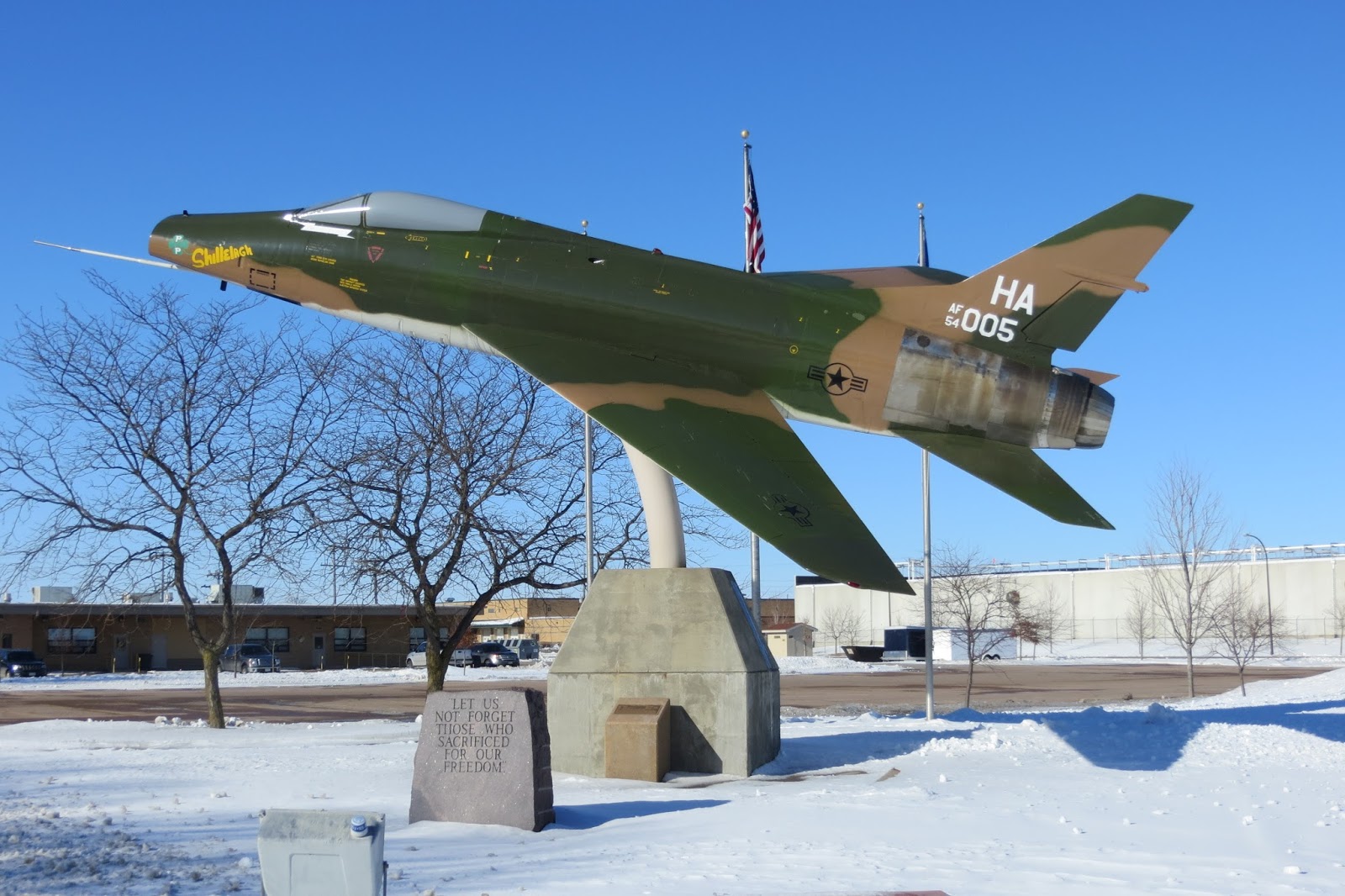 |
| Once on display at Andrews AFB, it will look like this F-100 outside the Sioux City airbase. A Vietnam War-era fighter jet has been saved from the graveyard for retired military aircraft and is ready to be perched on it's final place of honor. Here is the story on this special plane, including a slide show, as heard on Iowa Public Radio. http://iowapublicradio.org/post/iowa-paint-shop-restores-f-100-jet |
Monday, October 26, 2015
New Life for Vietnam War Recordings
 |
| Steven Starnes (left) and me, in the IPR studio where his father's recordings were resuscitated. |
http://iowapublicradio.org/post/audio-letters-vietnam-war-0
 |
Friday, July 31, 2015
Project Jenny Brings TV to Vietnam
 |
| Click here for best version and photos Final magazine story |
Project Jenny / On the air—from the air
(2015)
 |
| Photo: AFVNVETS.NET |
The strategy was more complex
than simply building morale and making shows like The Beverly Hillbillies available to the audience in South Vietnam
“We were at RCA school when we
got wind of it, and I said they’ve got to be nuts,” according to Chief
Electronics Technician John Lucas. A graduate of submarine school, Lucas got
orders to meet a civilian on a street corner in Camden , New Jersey
The concept of airborne
telecasting had been researched since the early ‘60s. The first operational
assignment was to Cuba
Navy Captain George Dixon, a
World War Two veteran, was recalled to head up the project. Dixon Dixon
It was the job of senior tech
John Lucas to dismember and retrofit all of the essential components so they
could be squeezed inside the Super Connies. The precision work of customizing
all the modules was executed at Andrews Air Force Base. “The challenge was to
break it down so I could get two transmitters in there, get a whole television
studio in there, get all the stuff that feeds video tape machines, film chains
and all that stuff, get it packed in there so we could operate it and still be
able to do any maintenance.” When Blue Eagle Two was ready for an aerial performance
check, Capt. Dixon, Chief Lucas and an RCA engineer were all on board. Some of
the aviation personnel, it was said, refused to fly because the plane was
overweight. The crucial test flight was above Washington D.C. Lucas had his
wife watching television at midnight when engineers used a “function generator”
to create a false signal, and according to Lucas, “we literally wiped out a
broadcast station on the ground by jamming their signal. My wife saw a bunch of
squiggles on the screen. That was the intent; hands down it was a success.”
The conversion of Blue Eagle Three
was started next, as an advance party arrived at Tan Son Nhut Airbase to
establish Detachment Westpac, OASU’s operations center in Vietnam Saigon .
South Vietnamese Premier Nguyen Cao Key, U.S. Ambassador Henry Cabot Lodge and
General William Westmoreland were all beaming for the dedication ceremony at
the airport terminal, and of course, it was recorded for later broadcast. LeRoy
was attached to AFVN and ran the camera. “We had a full size studio camera and had
run cables into the airplane because that was the only place we had a VTR
(video tape recorder).” AFVN was responsible for programming the English language
channel and personnel would bring along the show films and video tapes for that
night’s schedule. AFVN also provided the on-air talent to read live newscasts
and announcements from a small onboard studio. LeRoy says he was on the
original flight: “I’d get some rip and read news before we left, you’d strap
yourself in and away we’d go.”
The twin TV aircraft flew on
alternating nights, seven days a week, showering news and entertainment from an
altitude around 10,000 to 12,000 feet. “We’d just get them on station and fly
in circles,” radio operator Dave Tice remembers from his 1966 perch behind the
pilot. “We’d fly a race track pattern, fly a leg, make a turn, and fly back.” The
Vietnamese channel was telecast simultaneously and they provided their own
program recordings. But for locals and expatriate viewers alike, American
blockbusters like Bonanza and
Combat were among the fan favorites. For several hours every
evening, the Constellations went on-the-air, from the air, broadcasting signals
that could be picked up by “rabbit ears” antennas throughout the capital city region.
The U.S. Saigon .
At one time, the PX’s imported 10,000 sets a month and usually sold out.
Television officially premiered
Feb. 7, 1966, with regularly scheduled programs in two languages. The
technology breakthrough that had swept western countries years earlier was now an
overwhelming sensation in South
Vietnam
“Just for kicks, a few of us patrolled the area to see how TV was being
received. The large round-about near the Brinks (hotel) with the small park in
the center was jam-packed with citizens like crazy, to see and hear. They
placed two receivers on a platform about seven feet above the ground…it kind of
reminded me of sitting in the last row at the Hollywood Bowl and trying to see
the color of the eyes of the performer! In another place, this time in a bar
not far from the Brinks, we noticed a large crowd of people on the street,
seemingly hypnotized at what was going on inside. All in all, we’re tickled
pink and hope both planes stay up.”
Compared to the “flat screen” TVs
and High Definition clarity of today’s picture, those wavy, rudimentary, black
and white images that mesmerized viewers in Saigon were captivating, nonetheless,
especially when considering the telecast was beaming down from an orbiting
aircraft. The basic “rabbit ears” reception could be sharpened with better
antennas, which became a form of barter. “Our engineers would make TV antennas
and I would trade those for all kinds of silly things,” according to AFVN’s
LeRoy; “Lobsters from the Navy, steaks from the Army, and we would have parties
with all that stuff. The engineers knew exactly how to tune that antenna so it
got that signal perfectly.”
Television was becoming a hot
commodity, but not everyone liked it. Two months after the dawn of TV, the Viet
Cong mortared Tan Son Nhut where the Blue Eagles had parked right after the
night’s telecasts. Senior Tech John Lucas was still aboard BE2 when it
sustained a direct hit. “I was inside cleaning up. There was only one thing
between me and the mortar and that was the air conditioner.” The cooling unit,
installed to keep the television equipment from overheating, ended up saving
his life, but the Eagles were damaged. BE2 was in bad shape, although the
others returned to service quickly. The nightly television schedule had to be scaled
back for a month while Blue Eagle Two underwent major repairs, including a two
foot gash in the fuselage. A couple months later, Project Jenny was bolstered
when a third flying TV station arrived in-country, designated as Blue Eagle
Six.
All along, the plan was for
land-based facilities to replace the aerial broadcast platforms, and Gen.
Westmoreland was there for the ribbon cutting to christen AFVN’s first ground station
at Qui Nhon. He brandished a Samurai sword and sliced through a video tape to
inaugurate the station. Then, in October of ’66, AFVN’s new headquarters opened
near the U.S. Embassy, adjacent to THVN-TV, which would soon be broadcasting in
Vietnamese. The 300 foot tower was the tallest structure in Saigon
and provided excellent TV coverage. This allowed the Blue Eagles to concentrate
on the Vietnamese-speaking rural population in the Mekong Delta. “The State
Department put generators and TVs in the strategic hamlets and the larger
cities. I’m sure it was all propaganda,” recalls Jim Eanes, a 23 year old
Ensign who supervised the Blue Eagle technicians broadcasting the Vietnamese
programs. “It was entertainment and news for the government. They obviously
were trying to win the hearts and minds of the population.”
The four-prop Constellations bursting
with all the TV equipment were always overweight on takeoff; including diesel
for the generator that ran all the non-aviation electronics, in addition to the
aircraft’s own fuel. They were equipped with four of the most powerful Wright,
18 cylinder engines. “Some of the pilots commented the aircraft was a big,
lumbering beast,” according to technician Jim Hicks. The exception was Blue
Eagle One, which was the radio-only plane, free of the heavy video gear and
external TV antennas. “It flew just fine” for navy pilot Chuck Monroe. He was
in control of the cockpit in 1968 when BE1 was based in Da Nang North Vietnam Monroe Monroe
Blue Eagle One, with its enigmatic
assignment, was the most mysterious of the Project Jenny Constellations in Vietnam Hanoi
Like any other television
station, technical snafus would sometimes interfere with programming. The
constant vibrations of the big planes began to take a toll on broadcast
equipment, according to an insider’s account of the program logs. “One evening,
no less than five soldered connections in one tape recorder shook loose. Added
to this, the rainy season with its turbulent air currents came along, and
notations in the program logs began to appear.” A sample of log entries shows
broadcast interruptions for various reasons: “Transmitter failure,” “probably bad
amplifier,” “lost audio,” and “video tape machine kaput.” The most alarming log
notation was a near disaster: “At 19:15 a fire broke out in #4 engine. The
supercharger blew smoke into the fuselage. So smoky the pilots couldn’t read
instruments. At low altitude hatches open and smoke cleared.” The unidentified writer
concludes, “This was the closest a Blue Eagle aircraft ever came to an actual
ditching.”
There were other vivid
recollections too, based on accounts from Blue Eagle veterans and old news stories.
Occasionally, air strikes in support of ground troops would force the Connies
to change course; BE2 was raked by a 50-caliber machine gun during takeoff from
Saigon near the end of the Tet Offensive; and three of the unit’s officers were
wounded when the VC bombed the Victoria
Hotel Hue
By the late 60s, television had
become deeply rooted in South
Vietnam Saigon ,
young American military newscasters were seen as TV celebrities. Servicemen bought
portable sets for their hooch, and the South Vietnamese government was learning
how to spin its own news for the Vietnamese population, both friend and foe. The
several hundred American military men, who kept the Blue Eagles in the air, had
made the innovation of television into Vietnam
Five years after that breakthrough
baseball broadcast, Project Jenny put itself out of business, flying its final TV
mission on Sept. 30, 1970, and the entire project was wound down by the end of
the year. A network of reliable ground stations was providing a full schedule
of programming over a wider reception area, and with more sophisticated
production techniques, including live news, sports and program specials than
could ever be done from an airplane. As primitive as the Blue Eagles might seem
today, in one respect, they were ahead of their time; millions of viewers still
receive their television from platforms in the sky—except today, we call them
satellites. Meanwhile, that Minnesota
Sidebar: Super Dooper Blooper
Blunders are just part of the
business in live television broadcasting. Most of the fluffs and faux pas are
harmless, often humorous, but an innocent gaffe made by a Blue Eagle technician
in 1968 had the potential to escalate into a diplomatic kerfuffle. It was right
after the Tet Offensive; a sensitive time with civilians and the military still
on edge. A prime time audience was watching a Vietnamese language program when the
sound track was mismatched and startled viewers heard the wrong channel; a tape
recording that was meant for Vietnamese radio. “It was a big brouhaha when we
landed,” according to Lt. J-G Ralph Koozer, who was in charge of the broadcast
technicians on that flight. “I heard the skipper say the Vietnamese were
hopping mad and wanted to come up and shoot down the plane.” Exactly what the audience
heard is not clear, but another Blue Eagle veteran, Jim Eanes, was told that
the audio was a PSYOPS broadcast intended for the enemy. “The South Vietnamese
Air force thought the Viet Cong had taken over the Blue Eagle and scrambled a
couple F-5’s.” Koozer says the mistake involved a “humongous patch panel,” and
the mix-up happened as they were patching music into the plane’s internal
speakers for the crew to listen to. The story circulated through the squadron
back in the States, where Eanes heard how the technical difficulty was
resolved: “The American crew was able to convince the fighter pilots that it was
an unintended blooper, they’ve fixed it, and the correct audio was now going
out.”
Saturday, June 20, 2015
U.S. Army War College's National Security Seminar
 |
| At Carlisle Barracks, Harrisburg, PA (June 2015) |
 |
| One of 25 breakdown groups, referred to as "seminars" |
Subscribe to:
Posts (Atom)